
By the NZ Blinds team | Updated July 2026
The safest blinds for a home with young children are the ones with no cord a child can reach — cordless, motorised or wand-operated blinds, and shutters. If a blind already has a looped cord or chain, secure it out of reach or replace it. That’s the whole message, and the rest of this NZ Blinds guide is about how to act on it.
Blind cord safety matters more than most parents realise. Since 2008, eight New Zealand children have died after becoming tangled in the cord of a window covering, according to Product Safety New Zealand. Every one of those deaths was preventable.
The rules are changing, too. In 2026 the New Zealand Government confirmed it will make safety standards mandatory for new corded blinds — so this is a good moment to look at the blinds in your own home.
Why are blind cords dangerous for children?
A loose or looped blind cord is a strangulation hazard because it hangs at the height a small child can reach, and an accident can happen in seconds. Product Safety NZ puts it plainly: in less than the time it takes to boil the kettle, a young child can become tangled in a cord and lose consciousness.
The danger isn’t limited to the nursery. Children climb. A cot, a bed, a sofa or a low bookshelf near a window can bring a cord within reach in any room — the lounge, a rental, the grandparents’ place. Check every room a child spends time in, not just where they sleep.
Roman blinds deserve a mention of their own. The cords on the back of the fabric can be just as dangerous as a visible pull cord, even though you don’t see them day to day.
What are New Zealand’s new blind cord safety rules?
From 2026 it will be mandatory for new corded window coverings sold in New Zealand to meet one of four internationally recognised safety standards — the ones used in Australia, Canada, the European Union and the United States. The Government announced the change after years of coroner recommendations, and MBIE plans to consult on the detail during 2026.
In practice, new corded blinds may need shorter cords, clearer warning labels, or safety devices supplied in the box so cords can be fixed to the wall and kept out of reach. Businesses that sell window coverings are responsible for making sure what they supply is safe.
A few things worth knowing:
- It’s about new products. The standard applies to newly supplied blinds, not the ones already on your windows.
- There’s a lead-in. A transition period of about a year kicks in once the change is formally made.
- Nothing is banned. Existing corded blinds aren’t outlawed — but they’re still a hazard, so make them safe now rather than wait.
What makes a blind child-safe?
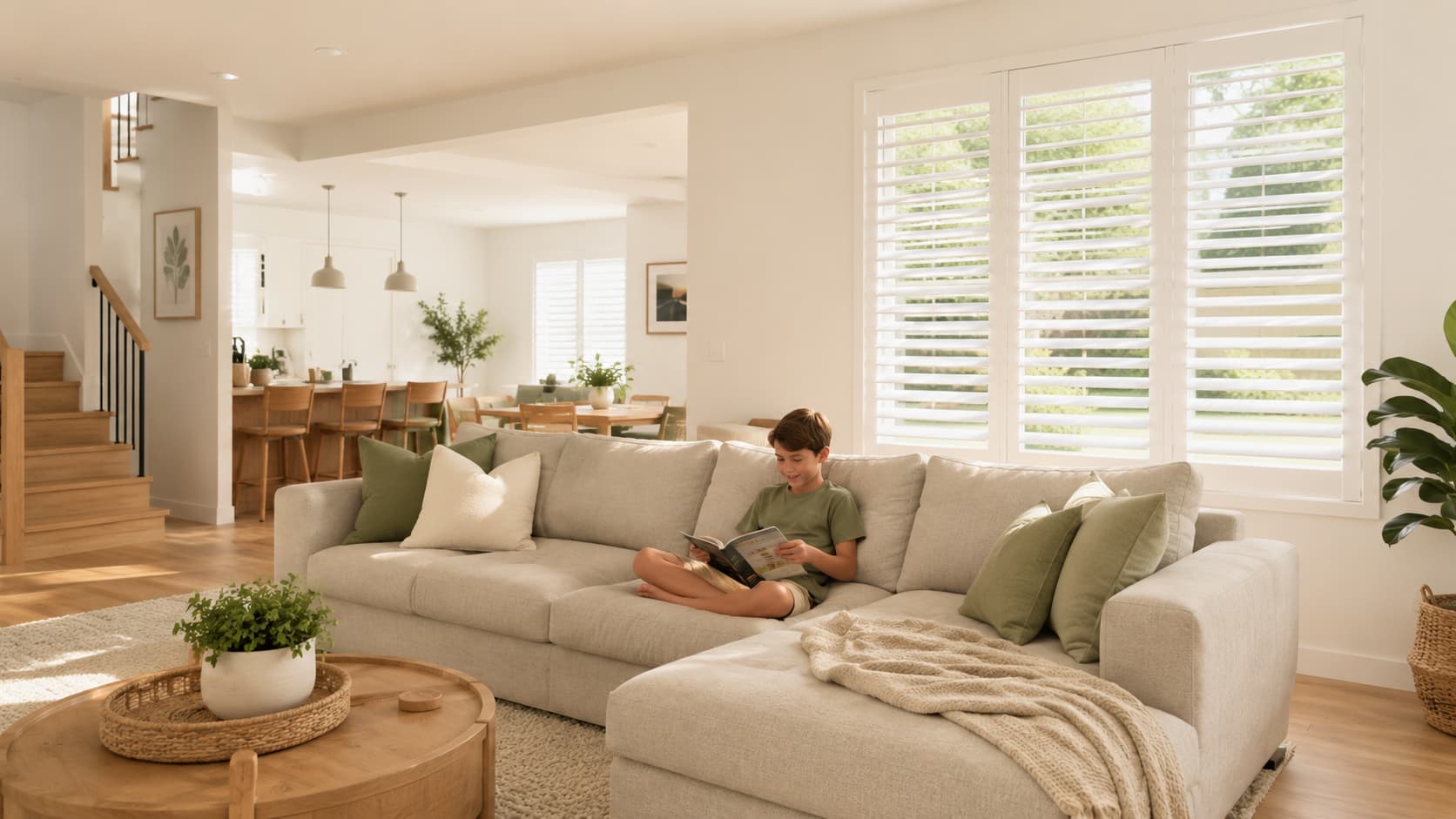
A child-safe blind is one with no accessible cord or chain — the hazard is removed, not just managed. Four operating styles do that: cordless, motorised, wand control and shutters. Each keeps the window free of the looped cords that cause harm, and each suits different rooms and budgets.
| Operating style | How it works | Good for |
|---|---|---|
| Cordless | Push up or pull down by hand — no loose cords | Bedrooms, playrooms, low windows |
| Motorised | Remote, wall switch, app or home automation | High or hard-to-reach windows, whole-home |
| Wand control | A rigid wand tilts or draws the blind — no looped chain | Verticals and venetians |
| Shutters | Louvres adjust by hand — no cords at all | Living areas, wet areas, a premium look |
Cordless, motorised and shutter options all take away the thing that makes a corded blind risky. They also look cleaner and are easier to use day to day, which is why they’ve become the default choice for family homes.
Which child-safe blinds does NZ Blinds sell?
Every made-to-measure blind from NZ Blinds can be specified without a hazardous cord, and much of the range is manufactured here in New Zealand. NZ Blinds’ stand-out for families is the AutoWand cordless blind — “Best for Kids” certified, completely cord-free, and priced from around $90 per blind.
Already ahead of the new rules. Every corded blind NZ Blinds sells already meets or exceeds New Zealand’s new safety standard, and the compliance details are available on request — so a new blind is a safe choice from day one.
- AutoWand cordless blinds — “Best for Kids” certified and cord-free, from about $90 per blind.
- Cordless and motorised roller blinds — including blackout roller blinds for nurseries and bedrooms, where good sleep matters as much as safety.
- Honeycomb blinds — cordless options that also insulate, handy for cold Kiwi rooms.
- Motorisation across the roller range — remote, wall switch or app control, ideal for windows you can’t easily reach.
- Shutters — a cord-free option for living spaces and wet areas.
Not sure what suits a particular room? Order free samples from NZ Blinds and see the fabrics at home before you decide.
How do you make existing corded blinds safe?
You don’t have to replace every blind at once. Start by fitting cord cleats or tension devices to keep the cords out of reach, then swap the highest-risk blinds for cord-free ones over time. Here’s the simple order NZ Blinds recommends for a safer home:
- Walk through the house and note any long or looped cords within a child’s reach, or near furniture they can climb.
- Where you can, replace corded blinds with a cordless or motorised alternative — it’s the surest fix.
- Where you can’t yet, fit a cord cleat, tension device or cord guide. Fix it firmly to the wall or window frame, keep the cord taut, and mount cleats at least 1.6 metres off the floor so they’re out of reach.
- Move cots, beds and climbable furniture away from windows with corded coverings.
NZ Blinds stocks the cord safety accessories you need for step three — cord cleats and guides are inexpensive and quick to fit.
Room-by-room safety checklist
- Choose cordless, motorised or wand-operated blinds wherever you can.
- Avoid long or looped cords in children’s bedrooms and play spaces.
- Keep beds, cots, sofas and anything climbable clear of corded windows.
- Fit tension devices or cleats on any cords or chains that remain.
- Check every room a child can get into — not only where they sleep.
- Planning a nursery or child’s room? Sort the blinds before the little ones arrive.
Our commitment to safer blinds
NZ Blinds backs the move to safer standards, and so does Aspect Living, the New Zealand manufacturer behind much of the range. Aspect’s child-safety measures include cord connectors supplied with roller blinds, warning swing-tags on corded products, and design changes such as removing the chained bottom weights from vertical blinds. Every corded blind comes with a safety cord guide or cleat and an installation guide, so the safe option is there from day one.
Frequently asked questions
No. The new rule means new corded window coverings will have to meet a recognised safety standard, but corded blinds aren’t banned, and the rule doesn’t apply to blinds already on your windows. For a home with young children, the safest choice is still a cordless, motorised or shutter option.
Yes. Every blind NZ Blinds sells already meets or exceeds New Zealand’s incoming standard for corded window coverings, and compliance literature is available on request. Buy a new blind from NZ Blinds and you’re covered from day one; the make-it-safe advice is for older corded blinds you may already own.
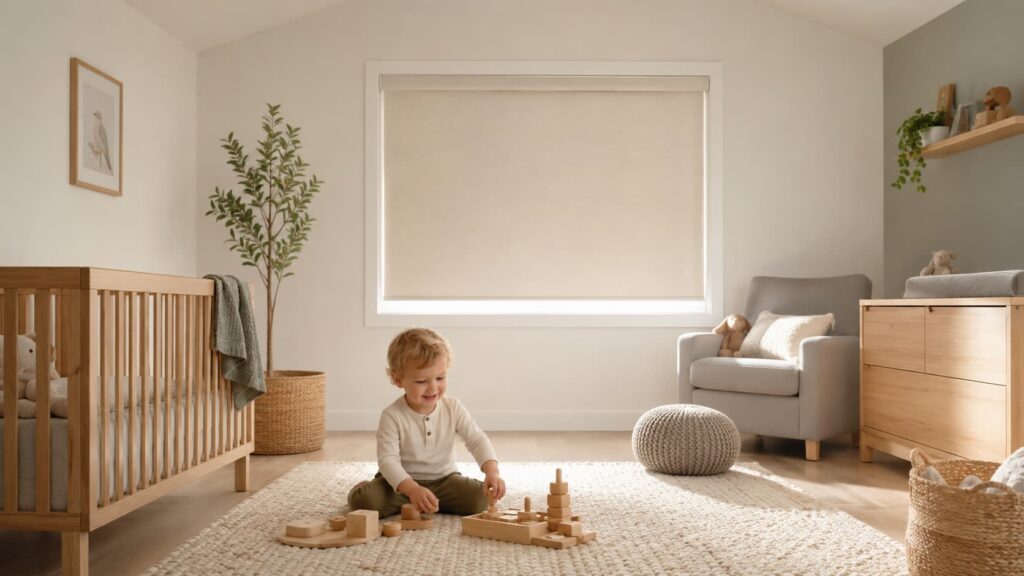
The safest blinds for babies and toddlers are cordless or motorised blinds, or shutters — anything with no cord a child can reach. For a nursery, a cordless blackout roller blind is a popular pick, because it helps with daytime sleep as well as keeping the window cord-free.
Roman blinds can have cords on the back of the fabric that are just as risky as a visible pull cord, even though you don’t see them. If you love the look, choose a cordless version and keep any operating cords secured well out of a child’s reach.
No. The standard applies to newly supplied products, not the ones already installed in your home. There’s no requirement to replace existing blinds — but making them safe with a cleat or tension device, or switching to cordless over time, is well worth doing.
Fit a cord cleat, tension device or cord guide, fixed firmly to the wall and mounted high enough to be out of reach. Keep the cord taut so it can’t form a loop, move climbable furniture away from the window, and check the fix every so often.
It depends on the type. The most affordable cord-free upgrade from NZ Blinds is the AutoWand, from around $90 per blind, and it’s “Best for Kids” certified. Full motorisation runs from about $90 to $333 per motor depending on the system, with some blinds — like honeycombs — offering cordless lift as standard.
The safest choice for your family
To recap: for a home with young children, the safest choice is a cord-free blind — cordless, motorised, wand-operated or a shutter — with any cords you keep secured out of reach and climbable furniture moved away from windows.
Your next step: browse NZ Blinds’ motorised blinds and blackout blinds for nurseries, or order free samples to try at home. Prefer a hand choosing for a specific room? Get in touch — we’re happy to help.
Related guides: Best Blinds for Your Baby and Child’s Room · Motorisation explained · Shutters